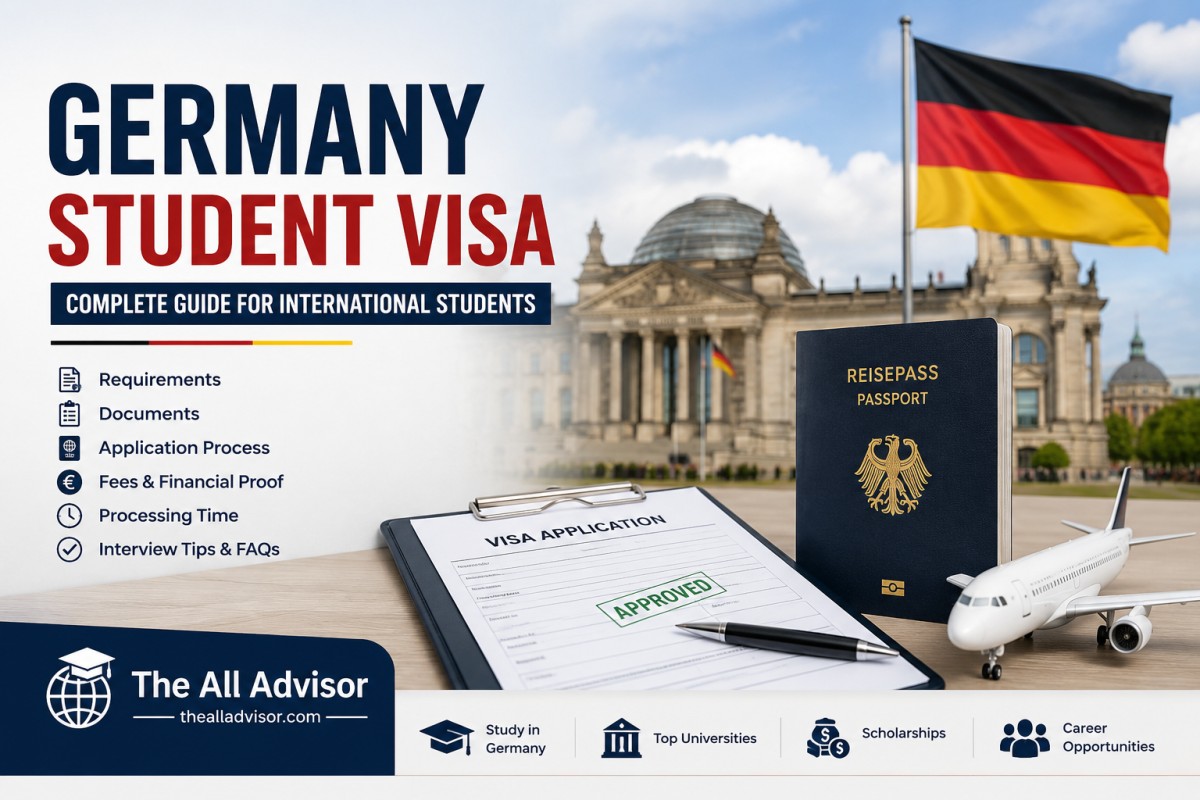
Germany Student Visa: Complete Guide for International Students
Introduction
Germany has become one of the most popular study destinations for international students due to its world-class universities, globally recognized degrees, affordable education, and excellent career opportunities. Every year, thousands of students from Pakistan, India, Bangladesh, Nepal, Nigeria, and many other countries choose Germany to pursue higher education in fields such as Engineering, Computer Science, Artificial Intelligence, Business, Medicine, and Data Science.
If you are planning to study in Germany in 2026, obtaining the correct student visa is one of the most important steps in your study abroad journey. Understanding the visa requirements, required documents, financial proof, blocked account, APS certificate, and application process can help you avoid unnecessary delays or visa refusal.
This comprehensive Germany Student Visa 2026 Guide explains everything international students need to know before applying. Whether you are applying for a Bachelor’s, Master’s, or PhD program, this guide will help you understand the complete Germany student visa process with the latest information and practical tips.
To understand Germany’s higher education system, universities, and student life, visit the Study in Germany Official Portal.
What is a Germany Student Visa?
A Germany Student Visa is a long-term national visa that allows international students from non-EU and non-EEA countries to enter Germany for higher education. It is issued to students who have received admission to a recognized German university or higher education institution.
After arriving in Germany, students usually need to apply for a residence permit through the local immigration authority to continue their studies legally for the duration of their academic program.
Germany offers different types of study-related visas depending on your situation:
- Student Visa – For students who have already received an official admission letter from a German university.
- Student Applicant Visa – For students who need to travel to Germany before receiving final admission or to complete entrance examinations or interviews.
- Language Course Visa – For students enrolling in a German language course before beginning their academic studies.
Choosing the correct visa category is essential, as each type has different eligibility requirements and application procedures.
Who Needs a Germany Student Visa?
Most international students from countries outside the European Union (EU), European Economic Area (EEA), and Switzerland require a Germany Student Visa before traveling to Germany for higher education.
Students from countries such as:
- Pakistan
- India
- Bangladesh
- Nepal
- Nigeria
- Sri Lanka
- Ghana
- Kenya
- Egypt
- Many other non-EU countries
generally need to obtain a student visa before entering Germany.
Some nationalities may be allowed to enter Germany without a visa and complete certain immigration formalities after arrival, depending on German immigration regulations. Since visa rules vary by nationality and may change over time, applicants should always verify the latest requirements with the German embassy or consulate responsible for their country before making travel arrangements.
Germany Student Visa Requirements 2026
Before applying for a Germany Student Visa, applicants must meet the eligibility requirements set by the German authorities. While specific requirements may vary depending on nationality and individual circumstances, most international students are expected to provide the following:
Admission Letter
Applicants must have an official admission letter from a recognized German university or higher education institution. The admission letter confirms that the student has been accepted into an eligible academic program.
Valid Passport
A valid passport is required throughout the visa application process. It should remain valid for the required period according to German visa regulations.
Financial Proof
Students must demonstrate that they have sufficient financial resources to support themselves during their stay in Germany. Financial proof may include a blocked account or other accepted forms of funding, depending on the applicable regulations.
APS Certificate (Where Applicable)
Applicants from certain countries may be required to obtain an APS Certificate before applying for a German student visa. This certificate verifies the authenticity of academic qualifications submitted during the application process.
Health Insurance
International students are generally required to have appropriate health insurance that meets German requirements. The type of insurance needed may vary depending on the stage of the application and the student’s circumstances.
Completed Visa Application Form
Applicants must accurately complete the official Germany student visa application form and submit it along with the required supporting documents.
Passport-Size Photographs
Recent passport-size photographs that meet German visa photo specifications are usually required as part of the application.
Academic Documents
Applicants should provide their academic certificates, transcripts, and other educational records requested by the university or visa authorities.
Language Proficiency
Depending on the study program, applicants may need to provide proof of English or German language proficiency if required by the university.
Meeting these requirements and ensuring that all documents are complete and accurate can significantly improve the chances of a smooth visa application process.
Before submitting your application, always review the latest Germany Student Visa Requirements to ensure you meet the current eligibility criteria.
Required Documents Checklist
Before attending your Germany student visa appointment, prepare all necessary documents carefully. Submitting complete and accurate documentation helps reduce processing delays and improves the overall application experience.
The commonly required documents include:
- Valid Passport
- Completed Germany Student Visa Application Form
- Official University Admission Letter
- Academic Certificates
- Official Academic Transcripts
- APS Certificate (if applicable)
- Proof of Financial Resources
- Blocked Account Confirmation (where required)
- Health Insurance Documentation
- Passport-Size Photographs
- Updated Curriculum Vitae (CV), if requested
- Statement of Purpose or Motivation Letter (if applicable)
- Proof of Language Proficiency (English or German, where required)
- Visa Application Fee Payment Receipt (if applicable)
Depending on your country of residence or individual circumstances, the German embassy or consulate may request additional documents. Applicants should carefully review the latest document checklist provided by the relevant German diplomatic mission before submitting their application.
For the latest visa rules, required documents, and embassy guidance, refer to the German Federal Foreign Office.
APS Certificate for Germany
The Academic Evaluation Centre (APS) Certificate is an important document for applicants from certain countries applying to study in Germany. It confirms that an applicant’s academic qualifications have been verified and are considered authentic.
The APS process helps German universities and visa authorities evaluate educational documents before issuing admission or processing a student visa application.
Applicants who are required to obtain an APS Certificate should begin the process as early as possible, as verification may take several weeks depending on the application volume and country-specific procedures.
The APS application generally involves:
- Submitting academic documents for verification
- Paying the applicable processing fee
- Attending an interview if required
- Receiving the APS Certificate after successful evaluation
Since APS requirements differ by country and may be updated periodically, students should always consult the relevant APS office or official German authorities for the latest guidance before applying.
If you are applying from India, you should review the official APS Certificate Information to understand the document verification process before submitting your Germany Student Visa application.
Germany Blocked Account Requirement
One of the most important financial requirements for a Germany Student Visa is demonstrating that you have sufficient funds to support yourself while studying in Germany. Many international students meet this requirement by opening a blocked account (Sperrkonto).
A blocked account is a special type of bank account that secures funds for your living expenses during your stay in Germany. The deposited money is released gradually according to the applicable regulations, helping students manage their monthly expenses.
Several financial service providers offer blocked account services for international students. Before choosing a provider, compare their fees, processing times, and services carefully.
Applicants should verify the latest minimum blocked account amount and accepted providers through the official German authorities before transferring funds, as financial requirements may change over time.
Health Insurance Requirement
Health insurance is a mandatory requirement for most international students studying in Germany. Students must have valid health insurance coverage that complies with German regulations before they can complete their enrollment at a university and, in many cases, before receiving their residence permit.
Depending on the student’s age, study program, and individual circumstances, different health insurance options may be available, including public and private health insurance.
Health insurance generally helps cover essential medical services such as doctor consultations, hospital treatment, emergency care, and certain prescribed medications.
Applicants should ensure that their chosen health insurance provider meets the requirements of both the German university and the relevant immigration authorities. Since regulations may vary depending on the student’s situation, it is recommended to verify the latest insurance requirements before submitting the visa application.
International students can learn more about student health coverage through TK Health Insurance, one of Germany’s well-known public health insurance providers.
Germany Student Visa Fee
Applying for a Germany Student Visa is one of the final steps before beginning your academic journey. Along with preparing your documents, you should also be aware of the visa application fee and any additional costs that may arise during the process. Understanding these expenses in advance helps you plan your budget and avoid unexpected delays.
How Much Is the Germany Student Visa Fee?
As of 2026, the standard Germany national student visa (Type D) application fee for most adult applicants is €75. This fee is generally paid when you submit your visa application at the German Embassy, Consulate, or the authorized visa application center.
The visa fee is charged regardless of whether your visa is approved or rejected. Therefore, it is important to ensure that your application is complete and accurate before submitting it.
Payment Methods
The payment method depends on the German Embassy or Consulate in your country. Most missions accept one or more of the following options:
- Cash payment in local currency
- Bank draft or demand draft
- Debit or credit card
- Online payment (where available)
Always check the payment instructions provided by the German Embassy responsible for your region before your appointment.
Are There Any Additional Charges?
Besides the visa application fee, you may also need to pay for:
- APS Certificate (if applicable)
- Blocked account setup charges
- Health insurance premium
- Document translation and notarization
- Passport-size photographs
- Courier or document delivery services
- Visa application center service fees (if using VFS or another provider)
These costs vary depending on your country and personal circumstances.
Is the Visa Fee Refundable?
No. The Germany Student Visa fee is generally non-refundable, even if your application is refused or withdrawn after submission. For this reason, applicants should carefully review all documents before attending their visa appointment.
Tip: Keep the payment receipt safely, as the embassy may request it during the application process.
Germany Student Visa Processing Time
One of the most common questions international students ask is, “How long does it take to get a Germany Student Visa?” While there is no fixed timeline for every applicant, understanding the usual processing period can help you plan your travel and university enrollment more effectively.
Average Processing Time
The average Germany Student Visa processing time is usually 6 to 12 weeks after your visa interview and document submission. However, some applications may be processed faster, while others can take longer depending on individual circumstances.
Because processing times vary, students should avoid waiting until the last minute to apply.
Factors That Affect Processing Time
Several factors influence how quickly your visa application is processed:
Completeness of Documents
Incomplete applications often require additional verification, which can significantly increase processing time. Missing financial documents, incorrect application forms, or incomplete translations are common causes of delays.
Peak Admission Seasons
Visa applications increase dramatically before the summer and winter university intakes. During these busy periods, embassies receive thousands of applications, resulting in longer waiting times.
Background Verification
German authorities may verify your educational qualifications, financial documents, admission letter, or other supporting information before making a decision.
APS Verification
Applicants from countries where an APS Certificate is mandatory may experience additional processing time if APS verification has not been completed before the visa appointment.
Embassy Workload
Every German Embassy processes applications according to its own workload and appointment availability. Some locations have longer waiting periods than others.
When Should You Apply?
Experts generally recommend applying for your Germany Student Visa at least three months before your intended travel date. If possible, start preparing your documents immediately after receiving your university admission letter.
Applying early provides enough time to:
- Complete APS verification
- Open a blocked account
- Purchase health insurance
- Collect required documents
- Respond to any additional requests from the embassy
Starting early also reduces the risk of missing your university enrollment deadline.
Step-by-Step Germany Student Visa Process
Understanding the visa process step by step makes the entire application much easier. Following each stage carefully can improve your chances of a smooth and successful application.
Step 1: Receive Your University Admission Letter
Before applying for a student visa, you must receive an official admission letter from a recognized German university or higher education institution.
The admission letter confirms that you have been accepted into a degree program and is one of the most important documents required for your visa application.
Step 2: Obtain an APS Certificate (If Required)
Students from certain countries must obtain an APS Certificate before applying for a visa. This certificate verifies the authenticity of academic qualifications.
If APS is mandatory in your country, complete this process before booking your visa appointment.
Step 3: Open a Blocked Account
Most international students must open a German blocked account and deposit the required amount to demonstrate sufficient financial resources for living expenses during their first year of study.
The blocked account confirmation must be included with your visa application.
Step 4: Arrange Health Insurance
Health insurance is mandatory for international students in Germany. Depending on your age and study program, you may need public or private health insurance.
The insurance certificate should cover the required period specified by the German authorities.
Step 5: Prepare Required Documents
Carefully collect all necessary documents, including:
- Passport
- Visa application form
- University admission letter
- APS Certificate (if applicable)
- Blocked account confirmation
- Health insurance certificate
- Academic transcripts
- Educational certificates
- Passport-size photographs
- Motivation letter (if required)
Double-check that every document is complete and up to date.
Step 6: Book Your Visa Appointment
Schedule an appointment with the German Embassy or Consulate responsible for your area. In many countries, appointment slots fill quickly, especially before university intake periods.
Book your appointment as early as possible.
Step 7: Attend the Visa Interview
Visit the embassy on the scheduled date with all original documents and copies.
During the interview, the visa officer may ask questions about:
- Your chosen university
- Your study program
- Future career plans
- Financial resources
- Accommodation
- Reasons for choosing Germany
Answer honestly and confidently.
Step 8: Wait for Visa Processing
After your interview, your application enters the review process. The embassy may contact you if additional documents or clarification are required.
Avoid making non-refundable travel bookings until your visa has been approved.
Step 9: Receive Your Visa
Once approved, your passport will be returned with the Germany Student Visa.
Carefully verify all information printed on the visa, including:
- Name
- Passport number
- Visa validity dates
- Number of entries
Report any errors immediately.
Step 10: Travel to Germany
After receiving your visa, you can make your travel arrangements and prepare for your studies.
Carry all important documents in your hand luggage, including your admission letter, blocked account confirmation, accommodation details, and health insurance certificate.
After receiving an admission letter from a German university, international students must complete the student visa process. For students planning to study at top institutions such as TUM, understanding admission requirements and timelines is equally important. Read our complete guide on Technical University of Munich Admission 2026 for detailed information about programs, requirements, and application steps.
Germany Student Visa Interview Questions
The visa interview is one of the most important stages of the application process. The purpose of the interview is not to make the process difficult, but to confirm that you are a genuine student with a clear academic plan and sufficient financial resources.
Being well prepared can greatly improve your confidence and help you answer questions clearly.
Common Germany Student Visa Interview Questions
Below are some of the most frequently asked questions during a Germany Student Visa interview.
Why do you want to study in Germany?
Explain your academic reasons for choosing Germany, such as its internationally recognized universities, research opportunities, affordable education, or strong career prospects.
Why did you choose this university?
Mention the university’s reputation, course curriculum, faculty, research facilities, industry connections, or other factors that influenced your decision.
Why did you select this study program?
Discuss how the program aligns with your educational background, career goals, and long-term professional plans.
Who will pay for your education?
Clearly explain your financial resources, whether they come from a blocked account, scholarship, family sponsorship, or another accepted source.
What are your plans after graduation?
Show that you have realistic career goals. Explain how completing your degree will support your future professional development.
Do you have relatives or friends in Germany?
Answer honestly. Having relatives in Germany does not automatically affect your visa decision, but providing false information can.
Have you visited Germany before?
If applicable, mention previous visits and their purpose.
Where will you live in Germany?
If accommodation has already been arranged, provide details. If not, explain your plan for finding suitable housing after arrival.
How will you manage your living expenses?
Describe your financial planning, including your blocked account, scholarship, or sponsor.
What do you know about your university?
Research your university before the interview. Be familiar with your course structure, city, campus, and academic opportunities.
Interview Tips for Success
- Arrive early for your appointment.
- Dress neatly and professionally.
- Carry original documents and photocopies.
- Answer only what is asked.
- Speak clearly and confidently.
- Maintain eye contact.
- Avoid memorized or rehearsed answers.
- Be truthful and consistent with the information in your application.
- Stay calm even if additional questions are asked.
A well-prepared interview demonstrates that you are a serious student who has carefully planned your education in Germany.
Common Reasons for Germany Student Visa Rejection
Every year, thousands of students successfully receive a Germany Student Visa, but some applications are refused because important requirements are not met. In many cases, the rejection is not due to poor academic performance but because of missing information, incomplete documents, or an unclear study plan. If you understand these common mistakes in advance, you can prepare a stronger application and reduce the chances of refusal.
Missing or Incomplete Documents
A visa application should always include every document requested by the German authorities. Even a single missing certificate, unsigned form, or incorrect translation can delay the process or lead to a negative decision. Before submitting your application, review every document carefully and make sure nothing has been overlooked.
Insufficient Financial Support
Germany requires international students to show that they can support themselves financially during their studies. If your financial evidence is incomplete or does not satisfy the required standards, the visa officer may question your ability to cover living expenses in Germany.
Unclear Academic Purpose
Your application should clearly explain why you chose Germany, why you selected a particular university, and how the program fits into your future career plans. A well-defined academic goal helps demonstrate that your primary purpose is education.
Unsatisfactory Visa Interview
The interview is an important part of the application process. Applicants who appear uncertain about their course, university, or future plans may create unnecessary doubts. Giving clear, honest, and confident answers can leave a positive impression on the visa officer.
Incorrect or Misleading Information
Providing inaccurate details or submitting documents that cannot be verified may result in an immediate refusal. Always ensure that every document and every statement in your application is genuine and consistent.
Weak Study Plan
A convincing study plan shows that you have researched your chosen program and understand how it supports your long-term objectives. If your educational background and future plans do not match your selected course, the visa officer may ask for additional clarification.
Health Insurance Issues
Valid health insurance is an important requirement for international students in Germany. Applicants should arrange suitable coverage before travelling and ensure that it meets the university and immigration requirements.
Tips to Improve Your Germany Student Visa Approval Chances
A successful visa application is usually the result of careful preparation rather than luck. Taking the time to organize your documents and understand the process can make a significant difference.
Submit Your Application Early
Visa appointments and processing times can vary throughout the year. Applying several weeks or months before your intended travel date gives you enough time to complete any additional formalities if required.
Organize Your Documents Carefully
Prepare all required documents in advance and check that every certificate, transcript, passport copy, and financial record is complete, accurate, and properly arranged before your appointment.
Demonstrate Financial Stability
Present clear financial evidence that shows you are capable of covering your tuition fees and living expenses while studying in Germany. Well-prepared financial documents help strengthen your application.
Prepare for the Interview
Spend some time reviewing common interview questions. Be ready to explain your study plans, university choice, future career goals, and financial arrangements in a simple and confident manner.
Explain Your Goals Clearly
The visa officer should understand why you have chosen Germany instead of another country and how your selected degree will help you achieve your professional ambitions.
Keep Personal Copies
Always keep digital and printed copies of every document you submit. They can be useful if additional information is requested during the application process.
Follow Official Updates
Visa policies and document requirements may change from time to time. Before submitting your application, always review the latest instructions provided by the German Embassy or Consulate responsible for your country.
What to Do After Arriving in Germany
Receiving your visa is only the first milestone. After reaching Germany, there are several important steps you should complete to begin your student life smoothly.
Register Your Residence
One of your first responsibilities is registering your residential address with the local registration office. This registration is an important administrative requirement for international students living in Germany.
Finalize Your University Enrollment
Visit your university to complete the enrollment process, submit any remaining documents, and collect your student credentials. Once enrollment is complete, you can officially begin your studies.
Open a Local Bank Account
Although many students already have a blocked account, opening a regular German bank account makes it easier to receive payments, pay rent, and manage daily expenses.
Confirm Your Health Insurance
Ensure that your health insurance remains active after arrival and complete any verification required by your university or local authorities.
Apply for a Residence Permit
Depending on your nationality, you may need to obtain a residence permit after entering Germany. It is advisable to complete this process as early as possible to avoid unnecessary delays.
Collect Your Student ID
Your university will normally issue a student identification card after enrollment. Besides serving as your campus ID, it often provides access to libraries, public transport discounts, and other student benefits.
Get Involved in Campus Life
Participating in orientation programs, student clubs, language courses, and university events is a great way to build friendships, improve your communication skills, and adapt to life in Germany more quickly.
After arriving in Germany, international students should check the official Residence Permit Information to complete the required immigration formalities.
Frequently Asked Questions (FAQs)
How long does it usually take to receive a Germany Student Visa?
The processing time depends on several factors, including your country of residence, the German Embassy or Consulate handling your application, and the number of applications being processed. Since processing times can vary, it is advisable to apply as soon as you receive your university admission letter.
Do I need a blocked account for a Germany Student Visa?
In many cases, international students are required to provide proof that they have enough funds to support themselves during their stay in Germany. A blocked account is one of the most common ways to demonstrate financial resources, although other acceptable options may also be available depending on your circumstances.
Can Pakistani students apply for a Germany Student Visa?
Yes. Pakistani students are welcome to apply for a Germany Student Visa after receiving admission from a recognized German university. They must complete the required documentation, meet the financial requirements, and follow the visa application process set by the German authorities.
Is IELTS mandatory for studying in Germany?
Not necessarily. Whether IELTS is required depends on the university and the program you are applying for. Some universities accept alternative English language qualifications or may waive the requirement if your previous education was completed in English.
Can I work while studying in Germany?
Yes. International students are generally allowed to work part-time during their studies. However, students should always comply with the latest German employment and immigration regulations regarding working hours and eligibility.
What are the most common reasons for Germany Student Visa refusal?
Applications may be refused if important documents are missing, financial proof is insufficient, interview answers are inconsistent, or the study plan is unclear. Preparing your application carefully and providing genuine information can significantly improve your chances of approval.
Can I remain in Germany after completing my studies?
Yes. Many international graduates choose to stay in Germany after graduation to explore employment opportunities. They must follow the relevant immigration procedures and obtain the appropriate residence authorization before continuing their stay.
Is health insurance compulsory for international students?
Yes. Health insurance is an essential requirement for studying in Germany. Students should make sure their insurance policy satisfies both university enrollment requirements and German immigration regulations.
Can I transfer to another university after arriving in Germany?
Changing universities may be possible in certain situations. However, students should first discuss the process with their university and seek guidance from the relevant immigration authorities to understand any requirements that may apply.
Where can I find reliable information about Germany Student Visa requirements?
The most reliable source of information is the official German Embassy or Consulate responsible for your country. You can also refer to the official university website and Germany’s official government portals for the latest updates on visa policies and document requirements.
Conclusion
Choosing Germany for higher education is a valuable investment in your future, and obtaining a Germany Student Visa is one of the most important steps in that journey. While the application process may seem detailed, careful preparation, accurate documentation, and a clear understanding of the requirements can make the experience much smoother.
Before submitting your application, take the time to review every document, confirm the latest visa guidelines, and prepare confidently for your interview. Staying organized and following official instructions will help reduce unnecessary delays and improve your chances of approval.
Once your visa is granted, you’ll be ready to experience Germany’s world-class education system, multicultural environment, and exciting career opportunities. With the right planning and determination, your dream of studying in Germany can become a successful reality.
Planning to study in Germany? Don’t miss our complete guide on Germany Universities for International Students 2026, where you’ll find the best universities, tuition fees, scholarships, admission requirements, and everything you need to start your study abroad journey.